Religion

On Kautsky’s Foundations of Christianity – Part Four of the Introduction to the new German edition

Written by Alan Woods Wednesday, 21 December 2011
PrintE-mail

dead sea scroll Isaiah-thThe Dead Sea Scrolls were discovered in eleven caves near Qumran on the northwest shore of the Dead Sea. In 1947 a Bedouin goat herder threw a stone through a cave opening and heard something shatter. Inside the cave were seven scrolls, inscribed in Hebrew, wrapped in linen and stored in clay jars. Over the next decade 900 documents were found.


On Kautsky’s Foundations of Christianity – Part Three of the Introduction to the new German edition

Written by Alan Woods Friday, 09 December 2011
PrintE-mail

ChristianityThe growth of Christianity during the first centuries of the modern era was phenomenal, especially among the lower orders. People who had nothing on earth and who lived in poverty were promised immense rewards in the after-life – provided they accepted their lot as slaves. This doctrine had an obvious appeal to the downtrodden masses, but it had equally obvious advantages for the ruling class. Eventually, the latter realized this and took the appropriate measures. But all these measures were in vain. The Church continued to thrive despite persecution – and possibly because of it.


On Kautsky’s Foundations of Christianity – Part Two of the Introduction to the new German edition

Written by Alan Woods Friday, 14 October 2011
PrintE-mail

Introduction to foundations of christianity - www.marxist.comIn order to understand early Christianity it is necessary to place it in its historical context. In the second half of the second century BCE the Syrian Greek Seleucid Empire was being displaced by the rising imperial power of Rome. As a result, when Seleucus IV Pilopater ascended to the throne of the Seleucids, he not only had a much reduced empire, but was obliged to pay a heavy Roman tribute. The disasters of the Seleucid Empire had dire consequences for the Jewish people, leading to a chain of events that was later called the Abomination of Desolation.


On Kautsky’s Foundations of Christianity – Part One of the Introduction to the new German edition

Written by Alan Woods Friday, 23 September 2011
PrintE-mail

On Kautsky’s Foundations of Christianity – Part One of the Introduction to the new German editionReligion is not the motor-force of history but great social changes are expressed in changes in religion. In his book Ludwig Feuerbach and the End of Classical German Philosophy Engels explained that great historical turning-points have been accompanied by religious changes in the case of Buddhism, Christianity and Islam. The mass movements that were aroused by these beliefs in the early period of both Islam and Christianity shook the world.


Religion and Secularism

Written by John Pickard Wednesday, 27 April 2011
PrintE-mail

Religion and Secularism. Photo: Zoe MargolisAs the twenty-first century progresses, there has been an increasing interest and not a small amount of debate on the role of religion in society and particularly on advances in secularisation. Richard Dawkins’ book , ‘The God Delusion,’ was a best-seller in the UK and novels like ‘The Good Man Jesus and The Scoundrel Christ’ by Richard Pullman have touched raw nerves in Church hierarchies.


Religious Fundamentalism and Imperialism – Friends or Foes?

Written by Lal Khan Wednesday, 20 April 2011
PrintE-mail

Religious Fundamentalism and Imperialism – Friends or Foes?As the last Russian soldier crossed the Oxus River going back from Afghanistan into the Soviet Union in 1989, the Japanese-American philosopher at St. James’s University, Maryland and a CIA operative, Francis Fukuyama, came out with his iniquitous thesis on the “end of history”. However, although the Berlin Wall had fallen and the Soviet Union had collapsed, this thesis was soon refuted by history itself as the first Gulf War broke out in 1991.


Pope’s visit to Britain: crisis of Church mirrors crisis of capitalism

Written by Alan Woods Thursday, 16 September 2010
PrintE-mail

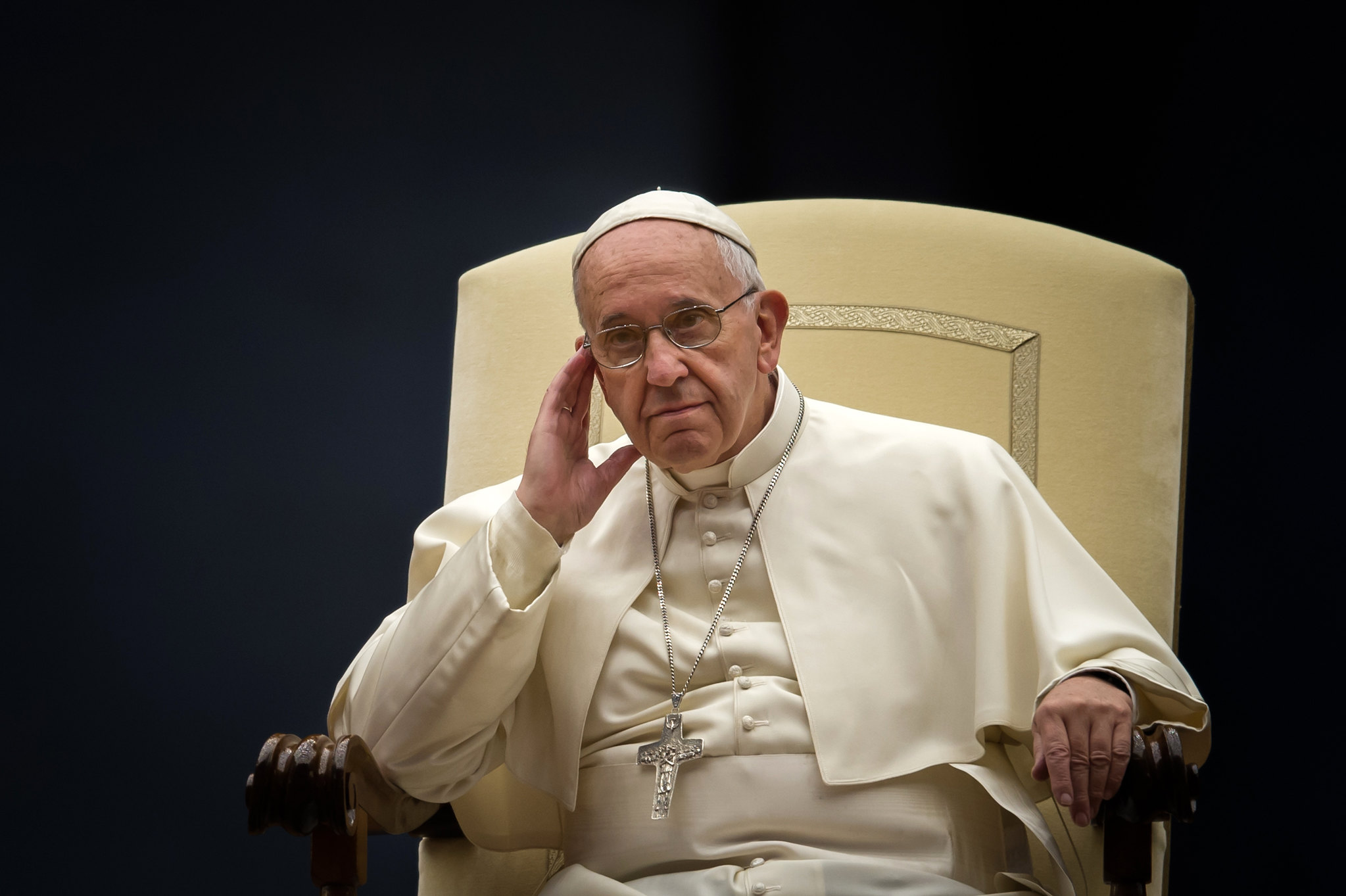
Pope’s visit to Britain: crisis of Church mirrors crisis of capitalism. Photo by Fabio Pozzebom/Abr.The Pope’s visit to Britain comes in the midst of the most serious crisis of capitalism since the Second World War, with a growing mood of discontent among the workers. No doubt a little help for the British Establishment in times like these from the Almighty will always come in handy. The Pope is also hoping to boost the fortunes of the Church after it has been shaken by scandals in one country after another.


Page 1 of 2

History & Theory » Topics