Millions of workers, peasants and students had actively participated in the gigantic events of the 1968-69 revolution in Pakistan. A whole generation had entered the arena of history to change their destiny. Some of the veterans who are still around have a strong nostalgia and pride of participating in those stormy events. We publish here a series of interviews and discussions with some of these prominent leaders and activists of the movement.
The movement of the students and the youth during the 1968-69 revolution in Pakistan had electrified the whole society. The workers were taking over factories and brought the country to a halt. The involvement of the soldiers and lower ranks of the armed forces would have made the decisive strike to defeat the system of drudgery and exploitation of the toiling masses of Pakistan. Had a revolutionary party been there to mobilize and organise that support of the army ranks then the outcome would have been a victory for revolutionary socialism.
Capitalism in Pakistan was not an independent, developing system, but a very dependent client of the major capitalist powers, unable to finance its investment plans without massive foreign aid. Througout the 1950s Pakistan's political structures lay in shambles and the decade closed with the army seizing political power through a coup d'etat.
The partition of the Indian subcontinent was a wound inflicted upon the living body of one of the oldest civilisations on earth. A civilisation that was rich in art, architecture, music, literature and other forms of human culture... its cultural diversity was its greatest beauty. The pain still remains and has left an indelible scar upon millions of people.
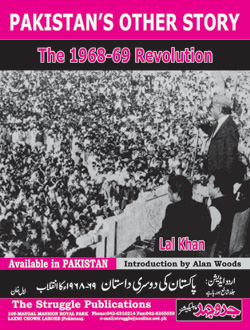
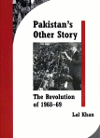
A new book by Lal Khan is being published to celebrate the 40th
anniversary of the 1968 Pakistan revolution. Here we publish Alan Woods' Introduction
in which he highlights the main processes of the tumultuous 1968 events and
explains how a new 1968 is being prepared in Pakistan in the coming period.
Page 2 of 2