Economic theory

Marx vs Keynes: Where Does Economic Growth Come From?

Written by Adam Booth Thursday, 10 November 2011
PrintE-mail

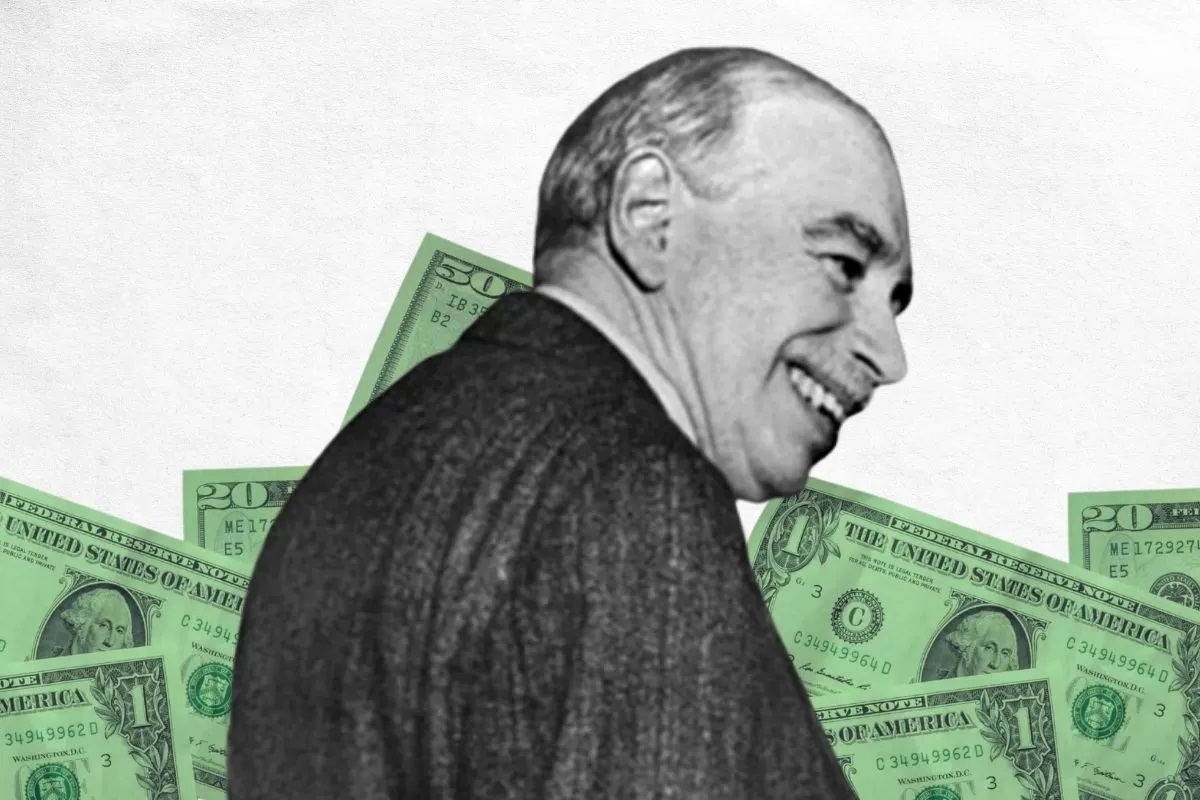
Marx vs Keynes: Where Does Economic Growth Come From?“We are all Keynesians now.” So said Richard Nixon, the Republican and former President of the USA, in 1971. Forty years later, it seems that John Maynard Keynes is back in fashion, especially amongst the leaders of the British Labour movement. The reformist leaderships of the Labour Party and the trade unions cling to the Keynesian idea that the economy can simply be “stimulated” back in growing. But as the Marxists have explained before, the current economic crisis is not just part of some boom-and-slump, but is an organic crisis of capitalism, and growth cannot simply be created at will.


How capitalism developed in Taiwan and South Korea – any parallels with China today? Part Two

Written by Luca Lombardi Monday, 19 September 2011
PrintE-mail

How capitalism developed in Taiwan and South Korea – any parallels with China today? Part Two. Photo: Ju Seok OhThe experience of economic planning in South Korea was broadly speaking, similar to that of Taiwan. What most characterizes the Korean experience is the prominent role of the chaebols, the giant conglomerates, in developing the economy.


How capitalism developed in Taiwan and South Korea – any parallels with China today? Part One

Written by Luca Lombardi Thursday, 15 September 2011
PrintE-mail

How capitalism developed in Taiwan and South Korea – any parallels with China today? Part One - photo: Mailer_DiabloThe crisis that has shaken the world economy since 2008 has pushed bourgeois ideologists to desperately seek a solution. They are looking for alternative ways of running their system, seeking to square the circle and maintain capitalism without its inevitable contradictions. As Asia, and China in particular, is doing so well, there is a burgeoning literature about the Chinese model, just as in the past there was so much made of the “Japanese miracle”. In Part One of this article Luca Lombardi looks at the experience of Taiwan.


The role of the State in the Italian economy in the 1930s and beyond

Written by Fred Weston Tuesday, 26 July 2011
PrintE-mail

When the 1929 Crash broke out it affected the Italian economy dramatically. Italy had just been through a serious monetary crisis, from which it had not yet recovered when the world crisis broke out. In this situation the capitalists desperately turned to the State for help.


The role played by the state in the development of capitalism in Japan

Written by Fred Weston Thursday, 21 July 2011
PrintE-mail

The role played by the state in the development of capitalism in Japan. Photo: Bill KeaggyThe classical view of how capitalism develops is that within feudal society a class emerges made up of merchants, bankers, early industrialists, i.e. the bourgeoisie, and that for this class to be able to develop its full potential a bourgeois revolution is required to break the limits imposed by the landed feudal aristocracy. That is how things developed, more or less, in countries like France and England, but not in Japan.


Inflation: Hitting the Poorest Hardest

Written by Adam Booth Tuesday, 17 May 2011
PrintE-mail

Inflation: Hitting the Poorest Hardest. Photo: Michael KalusInflation was persistently high throughout 2010, with an average RPI of 4.6% - the highest since 1991. Meanwhile, the CPI has been above 3% for the last 15 months, a whole percentage point above the Bank of England’s 2% target, prompting Mervyn King, the governor of the Bank of England, to write a total of four letters to George Osborne, the Chancellor of the Exchequer, explaining the causes for such consistently high inflation.


Monopoly capitalism and the case for socialism

Written by Will Roche Friday, 12 February 2010
PrintE-mail

Monopoly capitalism and the case for socialismWill Roche continues with the last in a series of three articles on monopoly capitalism.


Page 1 of 3

History & Theory » Topics