

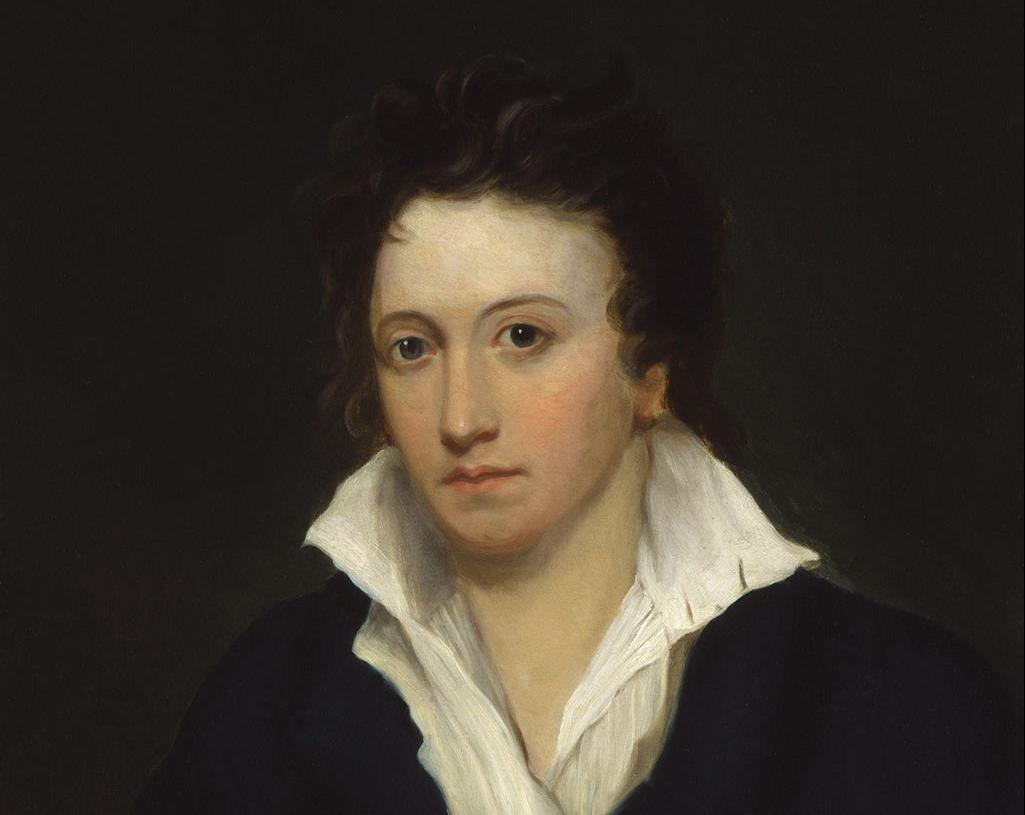
This article by Alan Woods looks at how the French Revolution affected British poets. It struck Britain like a thunderbolt affecting all layers of society and this was reflected in its artists and writers.
Revolution in general acts as the locomotive of history. This profound observation of Leon Trotsky applies not just to the development of the productive forces but equally to that of culture in its most general sense. The French Revolution was a fundamental turning point in world history. Like a heavy stone dropped into a silent lake, it caused waves that disturbed the most distant shores. No aspect of life remained untouched: military, economic, political, philosophical or literary. The minds of men and women were changed forever and in a most fundamental way.
The hidden wellsprings of human energy that lie dormant in the masses are released by revolution. It reveals powers of creativity the existence of which are unsuspected by the dominant classes and their intellectual eunuchs. A revolution stirs up society to the depths, arousing a new spirit of freedom in the most downtrodden layers of society. In every revolution, ordinary men and women discover their sense of dignity and pride in themselves; they begin to see themselves as human beings, not slaves. This revolutionary spirit was what enabled France to stand against the whole of monarchist Europe and defeat it.
The French Revolution reached its flood tide in 1793 with the plebeian dictatorship of Robespierre and the Jacobins, the most revolutionary section of the middle class who leaned on the semi-proletarian masses of Paris for support. But by this time the Revolution had already exhausted all its possibilities as a bourgeois revolution. Inevitably, reaction began to set in, as the bourgeoisie became frightened of the "excesses" of the masses and began to call for "Order". After the Thermidorean counter-revolution, the pendulum swung steadily to the right. Having lost confidence in itself, the bourgeoisie took refuge first in the Directorate and then in the dictatorship of Napoleon Bonaparte.
The French revolution had stirred up the whole of Europe. It challenged the old, rotten stagnant order and shook it to its foundations. The new ideas that sprang from the Revolution were a source of inspiration for all that was alive and vibrant in European society. They attracted the best of the intellectuals, artists, writers, philosophers and composers: Kant and Hegel, Beethoven and Shelley, Clausewitz and Goethe - all were, in different ways, children of the French Revolution.
When the Revolution exhausted itself and began to sink back under the weight of tradition, habit and routine, disillusionment set in. In the period of its ascent, it inspired enthusiasm for the ideals of Liberty, Equality and Fraternity. But under the regime of Thermidor, followed by the Directorate, the Consulate and finally the dictatorship of Napoleon Bonaparte, its appeal began to wane. The bourgeois values of Barras and Sieyes could not provide much inspiration to anyone.
Even when the original ideals of the Revolution were sinking under the leaden rump of bourgeois-Bonapartist reaction, however, the waves that emanated from the events of 1789-93 continued to roll across Europe, even unsettling the autocratic regime of tsarist Russia. It was as if a whole generation had awoken from the slumbers of centuries, opened their eyes, stretched their limbs and began to speak out.
Artists and society
The relation between art, literature and history is a complex one. The way in which broad historical processes affect art and literature is not a direct one. The poets and writers of England and other lands did not necessarily set out to express political ideas in a conscious way, though some did. The processes we are dealing with here are far more subtle and indirect. They do not express themselves as a conscious decision or trend, but rather a certain mood. However, unconsciously, or at best semi-consciously, poets and writers can and do reflect the general trends in society.
This is quite inevitable, and it is surprising that anyone should deny it. Society - that is to say all classes in society - is affected by great events that shape and mould its general opinions and state of mind. This can be positive or negative, optimistic or pessimistic, depending upon circumstances and the point of view of conflicting classes. When society is going forward, the productive forces are developing, there tends to be a general optimism, a cheerfulness in relation to the here and now and the future.
We saw this in the period of mercantilism, when capitalism was developing with a full wind in its sails. There was a spirit of optimism abroad that found an expression in the English novels of the 18th century - the works of Fielding, Sterne and Richardson. It was true even in the Elizabethan period, when English literature enjoyed its golden age. Men like Shakespeare and Ben Jonson expressed many different moods, but pessimism was not among them. There was no room for doubts about the existing social order or England's favoured destiny in the world.
Things begin to change with the development of capitalism and the resulting development of the class struggle. Poets and dramatists gradually begin to reflect the existence of class antagonisms, although at first only dimly, as in Goldsmith's Deserted Village, which reflects upon the horrors of the forced Enclosures that dispossessed the English peasantry in the 18th century. In France, however, the class struggle was far more directly expressed in philosophy and the works of the Encyclopaedists.
On this side of the Channel, capitalism was developing rapidly. The last decades of the 18th century witnessed the huge economic and social upheaval that we call the Industrial Revolution. Large numbers of poor agricultural labourers and their families were thrown off the land and driven by hunger to the towns where they suffered all kinds of hardships. The ruling class therefore had good reason to be alarmed by the threat posed by the French Revolution. It might light a fuse that could ignite the smouldering discontent of the masses in England.
The rise of capitalism was accompanied by an all-out assault on the English peasantry through the notorious Enclosure Acts by which the rich robbed the peasants of their lands and reduced them to starvation and beggary. Grasping landlords seized the common lands that the peasants had had access to for centuries. A popular poem of the time denounced this evil:
The law locks up the man or woman
Who steals the goose from off the common,
But leaves the greater villain loose
Who steals the common from the goose.
The horrors of the industrial revolution and the depopulation of the countryside as a consequence of the enclosure acts were compellingly reflected in The Deserted Village by the Irish poet Oliver Goldsmith written in 1769:
Ill fares the land, to hastening ills a prey,
Where wealth accumulates, and men decay:
Princes and lords may flourish, or may fade;
A breath can make them, as a breath has made;
But a bold peasantry, their country's pride,
When once destroy'd can never be supplied.
The dispossessed English peasants were forced to flee to the towns. The expropriated peasants and their families fled to the cities, clutching their pathetic bundles of possessions, in search of work. Here they were delivered into the tender mercies of the landlords, usurers, pimps and thieves. This is the poetry of intense human suffering and indignation:
If to the city sped - What waits him there?
To see profusion that he must not share;
To see ten thousand baneful arts combin'd
To pamper luxury, and thin mankind;
To see those joys the sons of pleasure know
Extorted from his fellow creature's woe.
Here, while the courtier glitters in brocade,
There the pale artist plies the sickly trade;
Here, while the proud their long-drawn pomps display,
There the black gibbet glooms beside the way.
Marx wrote that Capital comes onto the scene of history "dripping blood from every pore", and this is quite true. The genteel absentee landlords and their cold-hearted, calculating managers cared nothing for the sufferings inflicted by their actions. Together with the port-sodden parson they were the real powers in rural England, and the common people counted for nothing.
The English artists and writers of the period were repelled by the horrors of industrial capitalism. Their feelings were best expressed in Jerusalem - that marvellous poem by William Blake (1757-1827) that became a hymn of the British Labour Movement:
Give me my bow of burnished gold.
Give me my arrows of desire!
Give me my shield - o clouds unfold!
Give me my chariot of fire.
I will not cease from mental strife,
Nor shall my sword sleep in my hand
Till we have built Jerusalem
In England's green and pleasant land.
Effects of the Revolution in England
"Bliss was it in that dawn to be alive,
But to be young was very Heaven!" (Wordsworth, The Prelude)
At the close of the 18th century Britain was ruled by a complacent and self-satisfied Whig oligarchy, installed by what was amusingly called "The Glorious Revolution" but was in fact a most inglorious coup d'etat that placed on the throne of England the Dutch adventurer William of Orange. The Radicals complained that the Revolution had been hijacked by scoundrels, corrupt politicians and placemen who got into office by buying votes at election time. This practice was very well depicted by Hogarth in his painting of election day.
The Revolution of 1789 hit England like a thunderbolt. It shook up the whole social and political edifice of Britain. British Radicals were unambiguous in their attitude to events across the Channel. They enthusiastically toasted the "fall of despots" in France and eagerly awaited the new age of Liberty in their own country. Dr. Richard Price warned George III he would end up like Louis XVI "more properly the servant than the sovereign of the People." They were all Republicans at that time. The French Revolution was the focal point for the struggle between antagonistic classes in Britain. The Party of Church and King was led by the young Prime Minister Pitt, who organised a counterattack of the forces of reaction.
The ruling oligarchy regarded the French Revolution with undisguised horror and alarm. The Irishman Edmund Burke, who had earlier welcomed the American Revolution, soon saw the danger posed to the status quo in England of the events across the Channel. Burke hated the Whigs and people like Charles Fox for stirring up forces they could not control. In his Reflections on the French Revolution, using the usual argument about violence, he launched a vitriolic attack on the Revolution. In essence, the present day attacks on the October Revolution are no different. Originality is not the main strength of the intellectual defenders of the status quo.
Burke was immediately answered by Tom Paine, the most outstanding representative of revolutionary democracy. In 1791 he wrote his famous book The Rights of Man in answer to Burke's Reflections on the French Revolution. And he wrote it in the language of the common people - the "swinish multitude", as Burke had called them. 40,000 copies were sold in the first few months. Most of the purchasers were ordinary men and women - people who were new to politics. This shows that revolutionary ideas were falling on fertile ground in England.
The Party of Church and King were alarmed. William Pitt, the 34 year- old former "progressive" began to beat the Patriotic drum to whip up the mob. Homes were burned and democrats beaten up. Paine fled to France and was sentenced for treason in absentia. The democratic opposition went underground in England.
There was now a profound ferment among English intellectuals. The Radical Liverpool publisher Joseph Johnson courageously opened his house to people like the poet Blake and the pioneer of women's rights Mary Wollstonecraft, the author of A vindication of the Rights of Women (a "hyena in petticoats" Horace Walpole called her). She went to France, where she narrowly escaped the Guillotine under Robespierre's terror. There was also William Godwin, the precursor of anarchism, who rejected both marriage and private property.
The great artist and poet, William Blake, whose extraordinary genius has only won full recognition in recent years, was regarded as a lunatic by his contemporaries. He was, in truth, rather a strange character. From a very young age, if we are to believe him, Blake saw visions of angels and strange figures that he later painted. He claimed they sat beside him in the garden, or on trees, gathering around him as naturally as a group of friends. Much of his work is heavily influenced by this strange outlook, and contains a symbolism that is not always easy to grasp.
However, there is nothing hard to grasp about his attitude to the French Revolution. He welcomed the Revolution with undisguised joy, walking around the streets of London with the red cap of Liberty on his head. In 1790 he published his Song of Liberty. Blake was a red-hot republican and showed colossal courage in the face of the reactionary regime that suppressed every opposition tendency and treated the friends of France with great brutality. It was Blake who saved Tom Paine from arrest by warning him against going home twenty minutes before Pitt's agents turned up.
All this time the Revolution was forced to defend itself arms in hand, against the assembled powers of Europe. Her most active opponent was her old rival England. Despite the reactionary war hysteria, the best poets of England continued to side with France. The revolutionary poets of the 1790s did not confine themselves to the written word but attempted to establish links with the people, identifying themselves with the poor, the oppressed, the insulted and humiliated. Hazlett wrote: [they] scorned "degrees, priority, place, and the distinctions of birth," and "were surrounded by a rabble of idle apprentices and Botany Bay convicts, female vagrants, gipsies, meek daughters in the family of Christ, of idiot boys and mad mothers, and after them 'owls and night-ravens flew'."
The war with France marked the nadir of reaction in Britain. Habeus Corpus was suspended and a reign of terror against the revolutionary democrats followed. The British ruling class was terrified of the spread of revolution. In April and May 1797 the English fleet at Spithead mutinied twice against intolerable conditions. This was followed by another mutiny at the Nore. The red flag was hoisted on the ships. The mutiny was eventually crushed, but the government decided to intensify the repression. Opposition printing presses were smashed.
In 1798 an attempted rising in Ireland with French support failed but further increased the atmosphere of paranoia. The defeat of the uprising of the United Irishmen led directly to the Combination Acts of 1799 and 1800, which banned trade unions in Britain altogether. Brutal reaction was now in the saddle, cracking down on all dissidents. The reactionaries fought ideas with clubs and books with fire. The houses of known or suspected radicals were burned and oppositionists were beaten up in the streets. Tom Paine was tried in proxy and condemned to prison. At this time William Blake said that if Jesus Christ were alive he would be in one of Pitt's jails.
Wordsworth and Coleridge - The death of an Ideal
In their youth, Wordsworth and Coleridge were profoundly affected by the revolutionary fervour unleashed by the French Revolution. But as Bonaparte crushed the most radical elements they became disillusioned and moved back to the right. This is a phenomenon seen many times in history, where the intellectuals and artists (with some notable exceptions) swing to the left and right with the ups and downs of the revolution.
The fashion for landscape painting that developed in 18th century England, and which was also expressed in the poetry of Wordsworth, tells us something about the psychology of the intelligentsia at that time. The Romantics longed for wild, untamed landscapes that breathed the spirit of freedom. This idea is at least as old as the philosophy of Jean-Jacques Rousseau and his notion of the noble savage. Those who followed Rousseau thought of the countryside as pure and uncorrupted by the evils of town and court life. This in turn was a reaction against a decadent aristocratic society that was too sophisticated, too artificial, and too unnatural. Rousseau put forward the idea of the return to a natural state, where man's natural instincts would be free to develop.
Rousseau's ideas formed part of the general ferment among the French intelligentsia before the Revolution. Here the love of nature was really a code for revolution. These artists wished fervently for a storm that would blow away all the cobwebs and stale, suffocating air. The depiction of stormy weather in landscape paintings contained a subliminal message that stood for the great storm that finally broke out in 1789-93. The wild, untamed forces of nature stood for the revolutionary forces that were to be unleashed to sweep away a decaying social order.
The fashion for landscape painting in England was part of this yearning to return to nature and thus to turn one's back on the evils of capitalism, to return to a purer and more innocent age. This was later expressed in the poetry of William Wordsworth and the school known as the "Lake poets", after the picturesque and unspoilt Lake District in North West England that provided the inspiration for Wordsworth's best poetry. However, as we shall see, the real content of this "nature poetry" underwent a radical change in the course of Wordsworth's lifetime, and the cause of this transformation must be sought, not in nature, but in society and politics.
Despite the frenzied hostility of the English ruling class, the events in France aroused the most enthusiastic support of the foremost artists and intellectuals across the Channel. Literature, which had played so prominent a role in the battle of ideas, could not escape the consequences of its actions.
From his youth, William Wordsworth (1770-1850) was infatuated with nature. But in the poetry of the young Wordsworth, nature appears as a wild, uncontrollable force, akin to the forces unleashed by the French Revolution, which he greeted with enthusiasm. In 1790, one year after the storming of the Bastille, the 19-year old Wordsworth went to France, where he gazed in wide-eyed amazement at the spectacle of "human nature being born again". The young Wordsworth carried the British flag on a Jacobin demonstration - a fact that was duly noted by Pitt's secret police.
Perhaps the most remarkable poetic tribute to the French revolution is Wordsworth's famous autobiographical work The Prelude, where we have a vibrant and truthful picture of what a revolution is:
" [...] 'Twas in truth an hour
Of universal ferment; mildest men
Were agitated; and commotions, strife
Of passion and opinion, filled the walls
Of peaceful houses with unique sounds.
The soil of common life, was, at that time,
Too hot to tread upon."
(The Prelude, ix, 163-9)
The Prelude is Wordsworth's greatest masterpiece. It is at once a celebration of revolution and nature. The two ideas are here so mixed up as to be inseparable. Just as the experience of the elemental forces of nature inspired him in his infancy, so the experiences of the young Wordsworth in revolutionary France burned themselves on his consciousness and gave rise to a powerful spiritual uplift:
"O pleasant exercise of hope and joy!
For great were the auxiliars which then stood
Upon our side, we who were strong in love!
Bliss was it in that dawn to be alive,
But to be young was very Heaven!" (The Prelude, x, 690-4.)
That there was an element of naivety in the support of these literary men for the French Revolution is clear, nor did this revolutionary sympathy survive intact in all cases. In 1792 a Republic was declared in France. Austria and Russia invaded and the long period of revolutionary wars began that was to reshape the map of Europe. The revolutionary people of Paris responded to the aggression with the September massacres. The Terror had commenced. This began as a desperate measure of revolutionary self-defence. The "National Razor" commenced its deadly work. All foreigners were now liable to fall under suspicion of being spies. Even foreign revolutionaries like Tom Paine and Mary Wollstonecraft narrowly escaped execution at this time.
When the Jacobins were overthrown by the Thermidorean reaction, the Revolution entered into a phase of decline that ended in the dictatorship of Napoleon. The rise of Bonaparte disillusioned many erstwhile supporters of the Revolution, just as did the Stalinist political counterrevolution in Russia after the death of Lenin. In later years, disappointed by the ebb tide of the revolution under Bonaparte, both Coleridge and Wordsworth moved to the right.
A war always polarises public opinion. Only the bravest spirits can withstand the blast of patriotism that accompanies it. At first the radical poets tried to fight against the stream. In the Spring of 1793, when war broke out between France and England, the poet Coleridge, a close friend and collaborator of Wordsworth, wrote indignantly:
Like fiends embattled by a wizard's wand,
The Monarchs marched in evil day,
And Britain joined the dire array;
[...] For ne'er, O Liberty! with partial aim
I dimmed thy light or damped the holy flame;
But blessed the paeans of delivered France,
And hung my head and wept at Britain's name.
The Napoleonic wars developed into a titanic struggle on a world scale. From India to Egypt, from Spain to Russia, the conflict raged. The noisy chorus of chauvinism gradually drowned out the voices of reason. The English nation was now mobilised to a degree hitherto unheard of. Men and women were forced to choose.
In 1797 Coleridge was criticising the French Revolution from the left. In fact he had decided communist leanings, as Thelwall noted:
"[…] I found him a decided Leveller – abusing the democrats for their hypocritical moderatism, in pretending to be willing to give the people equality of privileges and rank, while, at the same time, they would refuse them all that the others could be valuable for – equality of property – or rather abolition of all property." (Quoted in E.P. Thompson, The Romantics, p. 131.)
But by 1798 both Wordsworth and Coleridge were feeling the pressure. The patriotic hysteria was intense. Coleridge wrote:
"You cannot conceive the tumult, calumnies and apparatus of threatened prosecutions which this event [the presence of Wordsworth] has occasioned round about us. If you too should come, I am afraid that even riots and dangerous riots might be the consequence." (Quoted in E.P. Thompson, The Romantics, p. 49.)
In a climate of ferocious reaction, many erstwhile sympathisers of the French Revolution had second thoughts. Repelled by the Napoleonic reaction and frightened by the pressure of the reaction, many intellectuals and writers now distanced themselves from the Revolution. In the Summer of 1799 Coleridge wrote to Wordsworth bitterly criticising those who "in consequence of the complete failure of the French Revolution, have thrown up all hopes of the amelioration of mankind and are sinking into an almost epicurean selfishness, disguising the same under the soft titles of domestic attachment and contempt for visionary philosophies." (ibid., p. 58.)
This is an excellent description of the behaviour and morality of the ex-revolutionary apostates of every period. Unfortunately it was soon to become applicable to Coleridge and Wordsworth themselves. They fled to Germany to escape military conscription. Wordsworth briefly visited France during the armed truce of 1802 to visit the woman he had made pregnant and then shamefully abandoned. By this time the Napoleonic reaction had liquidated all the political gains of the Revolution. He noted the changed atmosphere in the country where twelve years earlier he had seen "banners, and happy faces, far and nigh":
"[…] now, sole register that these things were,
Two solitary greetings have I heard,
'Good morrow, Citizen!' a hollow word,
As if a dead man spoke it. Yet despair
Touches me not, though pensive as a bird
Whose vernal coverts winter hath laid bare."
Despite these brave words, Wordsworth soon became disillusioned with revolution in general. He wrote a sonnet in which he attacks Bonaparte, but in effect blames the French people for his rise to power ("Shame on you, feeble-heads, to Slavery prone!"). It is always the habit of the intellectual who deserts the revolutionary movement to blame the masses for his own apostasy and cowardice. He soon became a rabid enemy of the French Revolution and an ally of Pitt. Wordsworth enthusiastically joined in the patriotic chorus.
A mood of black reaction set in in intellectual circles in England. The hired servants of Conservatism emptied a bucket of cold slops on the idealistic dreams of the youth. Men rationalised their abandonment of the revolutionary cause by repudiating their youthful ideals as impracticable dreams. Thus Coleridge wrote of his disillusionment with the ideal of revolutionary Freedom:
"Those feelings and that grand ideal of Freedom [...] do not belong to men, as a society, nor can possibly be either gratified or realised under any form of human government: but belong to the individual man, so far as he is pure and inflamed with the love and adoration of God in Nature."
The retreat from politics expressed itself in a flight back to nature. Wordsworth ends the second book of The Prelude thus:
"[…] if in these times of fear,
This melancholy waste of hopes o'erthrown,
If, 'mid indifference and apathy
And wicked exultation, when good men,
On every side fall off we know not how,
To selfishness, disguis'd in gentle names
Of peace, and quiet, and domestic love,
Yet mingled. Not unwittingly, with sneers
On visionary minds; if in this time
Of dereliction and dismay, I yet
Despair not of our nature; but retain
A more than Roman confidence, a faith
That fails not, in all sorrow my support,
The blessing of my life, the gift is yours,
Ye mountains! Thine, O Nature!"
Wordsworth and Coleridge retreated into the Lake District, seeking safety in complete isolation from the world and all its sinful works. About this time the inner meaning of nature in British art and poetry undergoes a subtle but decisive transformation. Central to this transformation was a change in the representation of nature.
In the early poetry of Wordsworth, nature had revolutionary connotations. In The Prelude, nature and freedom went hand in hand, and freedom and revolution were inseparable. There was a wildness about nature that challenged the existing order. Nature appears here as an untamed and elemental force, like revolution itself. But now the poetic presentation of nature became transformed into its opposite.
To the degree that Wordsworth and others turned their back on politics, the idea of nature becomes a convenient excuse for abandoning social life altogether. The idea of "going back to nature" becomes a synonym for escapism. This smug, comfortable, English view of the hills and streams became a subtle code word for patriotism and conservatism. It is meant to produce the same kind of reaction that some middle class Englishmen feel when they listen to Elgar's Pomp and Circumstance marches.
True, in the poems of the later Wordsworth there are sometimes vague echoes of earlier social concerns, of sympathy for the plight of the rural poor, but these too are transformed into a kind of impotent reformism – a variant on the theme of Christian charity and sentimentality. This is quite logical: since there was no way out on the road of revolution, the only thing left to the poor was to throw themselves on the magnanimity of their wealthy masters. In place of revolution and the self-movement of the masses, we have Victorian bourgeois charity, which treats the masses with pity – and therefore contempt.
"Liberty" now becomes a synonym for solitude – the solitude of the comfortable middle class person who, having reached retirement age, can retreat to a cosy cottage in the Lake District, from where he can mediate to his heart's content on the beauties of nature and the follies of mankind.
This interest in nature as a mode of escape accurately conveys the mood of the intelligentsia in England in this period of general reaction. In effect, nature was mobilised for war service just as the English apprentices and farm labourers were pressed into service in Pitt's armies. It was advisable to sign up with the majority, because the fate of dissenters was not an enviable one. The patriotic chorus drowned out all voices of protest and dissent. Nature had been recruited to the cause of English patriotism. And English patriotism was now on active service against revolution.
In the early poetry of both Wordsworth and Coleridge, nature appears as a revolutionary force, and is identified with the fight for freedom. But in later life, when their revolutionary passions cooled they turned to Nature for their "secure haven"- or rather, escape. Hence the obsession with nature in general and the Lake District in particular (hence the epithet "the Lake poets" later bestowed on them). Having lost all faith in the human race, they sought to derive morality from Nature.
This is entirely characteristic of Romanticism in general. The Romantics revolted against the existing bourgeois order, with its cold calculation and sordid money-grubbing. But, in the absence of any real alternative, it took refuge in a flight from reality. This took the most varied forms: nature-worship, particularly in remote and inaccessible places "uncontaminated" by the presence of human beings, or the exotic, or a non-existent idealised (feudal) past, or, as in Coleridge's case, the supernatural. Coleridge, without doubt, produced some of the finest lyrical poetry in the English language.
The unfinished fragment known as Kublai Khan is a perfect example of the exotic element of Romantic poetry. The story goes that the poem came to Coleridge in a dream, which was rudely interrupted by the visit of a "person from Porlock". Alas! The dreams of the Romantics were always being interrupted by such persons, the physical embodiment of the prosaic bourgeois everyday world from which they strove with every fibre of their being to escape.
This flight from the present at times takes the most comical forms. Coleridge collaborated with Wordsworth to produce a famous poetical anthology: Lyrical Ballads. In this collection there is a poem by Coleridge entitled The Foster Mother's Tale. This is about a youth who becomes very learned and "ere his twentieth year had unlawful thoughts of many things." Here we have the perfect picture of Coleridge and Wordsworth in their young days when they flirted with the French Revolution - most definitely "unlawful thoughts" in those days. As a result he is put into a dungeon for heresy, where he dreams of the wide-open prairies.
Actually, this dream corresponds closely to reality, since throughout the 19th century a large number of Europe's most energetic young people left for America after the defeat of revolutionary movements (after 1848, for example). He sails up a moonlit river in the New World (alone, of course), where he finds a new life, running, stark naked, with the Indians and is never seen again.
Wordsworth countered with another poem in the same anthology entitled Ruth. This is the story of a romantic young man who, having lived in mistaken idealism among the American Indians, longs for a more respectable relationship with an English maiden, whom he beseeches to return with him to the wide-open spaces. But, having learned the vices of the Indians (who, as we all know, were neither Christians nor gentlemen) abandons her, whereupon she goes mad. She is last seen playing on a rustic pipe and communicating with Nature, before receiving a suitably Christian burial. It is, in fact, the burial of youthful idealism that, as all middle class middle-aged gentlemen know, can only end in madness.
Coleridge and Wordsworth discarded their youthful revolutionism and lived on to become as respectable a middle-class conservative as even Hazlett could wish. Such violent swings from revolution to reaction are not uncommon in the history of the relations between artists and revolutions. It always seems to be the case that intellectuals who flirt with revolution in their youth end up by swinging very far in the opposite direction. They seem under some inner compulsion to atone for the sins of their youth by fervently embracing all the values they had earlier rejected. There is no middle way here!
The struggle between the classes culminated with the slaughter of unarmed demonstrators in Manchester, known as the Peterloo massacre. In August 1819 at Saint Peter's Field in Manchester a mass rally demanding the restoration of Habeus Corpus, a free press and the vote, was viciously attacked by the militia. The peaceful protest meeting was brutally attacked by mounted troops and militia, who cut down men, women and small children indiscriminately. Eleven people were killed and another hundred wounded by these cutthroats in uniform.
Byron and Shelley raged against this bloody slaughter, while William Cobbett denounced the government in ringing terms. But in the midst of all this turmoil, Wordsworth continued to contemplate his daisies and daffodils, while pocketing the rewards so generously conferred upon him by a grateful state. His adoration of Nature did not imply total indifference to politics. It did not prevent him from standing as a candidate against a Radical. He wrote:
"I cannot but be of the opinion that the feudal power yet surviving in England is eminently serviceable in counteracting the popular tendency to reform […] The people are already powerful far beyond the increase of their information and their improvement of mind." (Quoted in E.P. Thompson, The Romantics, p. 68, my emphasis, AW.)
Wordsworth's services to the ruling class did not go unrewarded. The poet was awarded a pension in the Civil list worth £300 by Sir Robert Peel, who further named him Poet Laureate - which he stipulated must be a sinecure. He was also made distributor of stamps for the county of Westmoreland. Wordsworth was now His Majesty's most loyal subject. In his last years, he became a Tory and a devout Christian. This ex-revolutionary even wrote a poem protesting against the introduction of the secret ballot, beginning:
"Forth rushed from Envy sprung and self-conceit
A power misnamed the Spirit of Reform
...now stoops she to entreat
Licence to hide at intervals her head
Where she may work, safe, undisquieted
in a close box!" (ibid., p. 77)
But Wordsworth the poet did not escape unpunished for his apostasy. If he gained a pension he lost his soul. It is no accident that his poetic inspiration ebbed away together with his revolutionary spirit. The poetry of the older Wordsworth is mostly worthless. Ifor Evans says of him: "He died in 1850, but poetry died in him in about 1815, only to return fitfully, almost painfully." (Sir Ifor Evans, A Short History of English Literature, p. 49). This comment is entirely justified. The Wordsworth of The Prelude, is the voice of great poetry; but the clapped-out, withered old reactionary of The Excursion and Ruth is fit only for the dustbin.
Evans continues: "As a young man he had high hopes for humanity: he had been nurtured in the Lake District, where everything had led him to think well of man. The teaching of Rousseau and his own experience convinced him that man was naturally good. In the French Revolution he saw a great movement for human freedom, welcoming it as many welcomed in our own days the Union of Soviet Republics. Wordsworth himself confesses that the greatest shock of his life came when England declared war on the young French Republic. In the years which followed he had to endure an agony of spiritual disillusionment. He saw that the France of the young Buonaparte was following, not the vision of the liberties of man, but the path of Charlemagne. Partly under Burke's influence, he came to regard England as the protector of freedom against this new imperialism." (ibid.)
Evans is too kind. Just as many of the middle class fellow travellers of the October revolution swung over to the camp of reaction, using the crimes of Stalin as an excuse for their personal cowardice, so Wordsworth betrayed the ideals of his youth in the most cynical manner, hiding behind the crimes of Bonaparte. The bitter old reactionary tried to hide from his own conscience by burying himself in the hills of the Lake District, where he posed as a poetic mystic, lost amidst the beauties of Nature, where he could in complete safety meditate on the follies of mankind. But poetic inspiration had deserted him entirely.
In The Prelude we have fine descriptions of nature, especially Wordsworth's beloved Lake District, where the ecstatic unity of subject and object - the total identity of the poet and nature - reaches a pitch of intensity that brings us close to pantheism. By contrast, in late Wordsworth, we have mere bathos, verging on the comic, as when he addresses a spade in a poem incredibly entitled "To the Spade of a Friend (an Agriculturalist), Composed as we were labouring together in his Pleasure Ground" (i.e., his garden!). Here bankrupt politics go hand in hand with bad poetry. In a merciless parody on one of Wordsworth's best-known sonnets, J.K. Stephen exposes his poetic decline:
"Two voices are there: one is of the deep;
It learns the storm cloud's thunderous melody,
Now roars, now murmurs with the changing sea,
Now bird-like pipes, now closes soft in sleep:
And one is of an old half-witted sheep
Which bleats articulate monotony,
And indicates that two and one are three,
That grass is green, lakes damp, and mountains steep:
And, Wordsworth, both are thine...." (Quoted in R. Graves, The Crowning privilege, p. 130.)
Of course, it cannot be maintained that the production of great art or poetry depends on the political standpoint of the artist or writer. The relationship of social developments and art is not so direct or mechanical. But what is true is that great art must be linked to humanity, and thus cannot be utterly indifferent to the fate of the human race. The greatest artists have always been finely tuned - in one way or another - to the changes in society. This is particularly true of those great events (like wars, religious reformations and revolutions) that mark turning points in human history. Great poetry has derived its inspiration from such events which make the soul of the poet vibrate to the heart-beat of history.
No-one can deny that the poetry of Wordsworth declined at the same time that he swung to the right in politics. This cannot be ascribed to accident. Wordsworth was inspired by the French Revolution, and his poetic Muse took flight, spurred on by the spirit of youthful generosity and enthusiasm, and by a vision of the future which was full of hope. When this vision died, poetic inspiration began to dry up with it.
Of course, this did not happen all at once. A capable poet (as he was) can live for some time on his accumulated skills and can for a time compensate for the lack of human inspiration with technical ability. But it is equally a fact that as time went on, the emptiness of his soul was reflected in an emptiness of his literary production.
Inevitably, this affected the personal relations between Wordsworth and Coleridge. They quarrelled with each other and parted company. This process can also be explained by the way in which they broke with their past. The speed with which both men slid into the arms of reaction differed. Wordsworth, the hypocritical "poet of Nature" displayed the greater cynicism and lack of principle.
Coleridge followed suit. As early as 1796 he wrote: "I have […] snapped my squeaking baby-trumpet of sedition, and have hung up its fragments in the chamber of Penances. I wish to be a good man and a Christian – but I am no Whig, no Reformist, no Republican." (Quoted in E.P. Thompson, The Romantics, p. 38.)
It is always the same with intellectuals who desert the revolution. They invariably go to the opposite extreme and "find religion". In the end Coleridge revealed himself to be an out-and-out reactionary with a contempt for the "lower classes", as revealed in a letter to one of his friends on the subject of servants:
"As for your servants and the people of Stowey in general, you have been often unwisely fretful with me when I have pressed upon you their depravity. Without religious joys and religious terrors, nothing can be expected for the inferior classes of society." (ibid., p. 16.)
In turning their back on humanity, both Wordsworth and Coleridge destroyed the source of their poetic inspiration. After all, there is nothing poetic in the bitterness of an old reactionary. In his disillusionment, he attempted to find solace in mysticism and metaphysics. But his inspiration, too, was withering on the vine. Gone was the youthful sparkle and ebullience that characterised him in his revolutionary period. He was now tired, ill and increasingly addicted to laudanum. He felt that his muse was deserting him and complained that he was unable to finish his long poem Christabel. He managed to finish the second part, but the lack of inspiration was so obvious that he gave up all thought of a third. He expressed the sad reality in his verse:
"Work without Hope draws nectar in a sieve,
And Hope without an object cannot live."
These despairing lines have the feel of an epitaph about them. It is the epitaph for the death of English poetry for the remainder of the 19th century. With the later Wordsworth we enter another world: that of middle class Victorian England. Paradoxically, it was Wordsworth himself who condemned the values of Victorian England in his sonnet "The world is too much with us" with its attack on "getting and spending" - the motor-force of 19th century English capitalism. Yet he ended up as one of its most enthusiastic converts.
The obsession with nature was only a convenient disguise to conceal the crude reality of this hard-hearted, flint-faced world of business, with a profit-and-loss sheet in place of a soul. For the "Lake Poets" it afforded a convenient escape-route from reality. For the newly risen moneyed middle classes who grew prosperous out of the blood, sweat and tears of little children in mines and factories, the products of such poets acted as a sedative, like a consoling sermon on Sunday, or a good joint of roast beef at dinner, or a glass of laudanum before bedtime.
Byron - "Mad, bad and dangerous to know"
Unlike Wordsworth and Coleridge, Byron remained loyal to his youthful revolutionary fervour. His innermost nature was revolutionary, but his weakness was his Romanticism. This was reflected in his admiration for Napoleon, just as later Romantics were to become admirers of Stalin without understanding what he really stood for.
The poetic spirit rebels against the constraints of tradition and habit and seeks to reshape the world in a new image. Thus, conservative poets are generally bad poets. The later writings of Wordsworth are proof enough of this assertion. But not all those poets who set out as revolutionaries deserted the cause. Lord Byron died in Greece, where he had gone to fight for the cause of national liberation. Shelley, whom Marx greatly admired, remained a consistent revolutionary democrat until his death. And the great national poet of Scotland, Robert Burns, also remained a fierce opponent of monarchy, religion and oppression.
Of the three, it was Byron (1788-1824) who made the biggest impact during his lifetime. His poems acted as a major source of inspiration for generations of Romantics, from Alfred de Musset in France to Alexander Pushkin in Russia. Unfortunately, his verses have not lasted well. His most famous poems are very long and belong to a more leisurely age when people had the time and inclination to read such things. But Don Juan still sparkles with a wit that is most un-English, and the shorter lyrical verses can still give much pleasure.
Don Juan begins with a rebuke to those poets who had sold their soul to the Devil, like Robert ("Bob") Southey who had, like so many others, abandoned his revolutionary ideals and become a hack writer, and was finally rewarded for services rendered with a pension from the English government, which made him Poet Laureate, although in practice he had given up poetry for more lucrative journalism and politicking. To this creature, and with a pointed reference to the "Lakers", (the "Lake poets", Wordsworth and Coleridge) Byron ironically dedicates his epic poem:
"Bob Southey! You're a poet-Poet laureate,
And representative of all the race;
Although 'tis true that you turn'd out a Tory at
Last - yours has lately been a common case;
And now, my Epic Renegade! What are ye at?
With all the Lakers, in and out of place?
A nest of tuneful persons, to my eye,
Like 'four and twenty blackbirds in a pye;
"Which pye being open'd they began to sing'
(This old song and new simile holds good)
A dainty dish to set before the King.'
Or Regent, who admires such kind of food;-
And Coleridge, too, has lately taken wing,
But like a hawk encumber'd with his hood-
Explaining metaphysics to the nation-
I wish he would explain his Explanation."
Lord Byron, who died in Greece when he was still young (he was 36), was seen by his contemporaries as a complete rebel. His generation was forged under the hammer-blows of the great events that flowed from the French revolution. But Byron's revolutionism needed no external source. It flowed from his innermost nature. His active involvement in radical politics began at a very young age.
George Gordon, sixth lord of Byron was born into what Thackeray might have called "shabby genteel" surroundings. Abandoned by his father, "Mad Jack", he was short and lame as the result of a physical defect (a shortened Achilles tendon). But on the other hand he was endowed with a handsome face and an instinctively rebellious temperament, fired by raw energy. But the world into which this natural revolutionary was born was anything but a revolutionary place.
Napoleon's final defeat at the battle of Waterloo ushered in a new period of European and British history: a period of triumphant reaction, in which, to quote Marx: "Pope and tsar, Metternich and Guizot, French Radicals and German police spies" entered into an anti-revolutionary conspiracy to "exorcise the spectre of Communism." The agreement between Austria, Russia and Prussia known as the Troppau Protocol, signed in 1820, stated the attitude of the three powers to "states which have undergone a change of government due to revolution." It declared: "if, owing to such alterations, immediate danger threatens other states, the Powers bind themselves by peaceful means, or, if needs be, by arms, to bring back the guilty state into the bosom of the Great Alliance." It was quite clear to everyone that any popular revolution would be seen by Alexander, Metternich and the king of Prussia as a threat to them, and that the revolutionaries would be "guilty".
This general atmosphere of reaction inevitably affected the psychology of the intellectuals and artists. A whole layer of former supporters of the French Revolution, notably Wordsworth and Coleridge, capitulated and went over completely to the side of the counterrevolution. However, a new generation of young poets still upheld the revolutionary tradition. And a new revolutionary force was beginning to take shape - the proletariat. This was reflected in the poetry of both Byron and Shelley.
The defeat of Napoleon brought no improvement in the condition of the masses. After 1815 there was a deep slump, which paralysed trade and brought widespread unemployment and poverty. Even before this the Continental system had destroyed trade for English manufactured goods. The ranks of the unemployed were swelled by a flood of discharged soldiers and sailors. The victors of Waterloo and Trafalgar were forced to beg for crusts of bread in the streets of London, Manchester and Portsmouth.
It was a period of great misery for the masses. The living standards of the masses suffered steep falls. In the period 1797-1804 the weekly earnings of weavers were 26 shillings, 8 pence. Form 1804-11 - 20 shillings; from 1811-18 - 14 shillings, 7 pence. With this money, it was possible to purchase (in equal quantities of flour, oatmeal, potatoes and meat): 281 pounds of food in the first period, 238 pounds in the second, and a mere 131 pounds of food in the third.
The position of the textile workers was particularly bad. 10,000 weavers and spinners in the North of England were laid off or had their wages cut. The mood of the masses was turning in a revolutionary direction. The authorities were increasingly alarmed. There were outbreaks of violence and smashing of machines in Lancashire and Yorkshire by the Luddites. These were desperate unemployed working men who had been threatened with hanging for the crime of machine smashing. The violence frightened the ruling class even more. The spectre of revolution loomed large in their minds.
The young Byron supported the workers. He even wrote a poem in honour of "King Ludd". In 1812 he delivered his maiden speech in the House of Lords. This is traditionally a non-controversial speech that is meant to provide the excuse for polite applause. But Byron chose to address the Lords on the subject of Luddism. It was a fiery speech denouncing the evils of capitalism and defending the working class, which was listened to in stony silence by the assembled aristocrats: "These men merely destroyed their looms," the young orator thundered, "which had become impediments to earning their bread."
Byron was a gifted orator with a flare for the dramatic gesture. To his horror, the speech was met by a blank wall of indifference. Byron's failure to make the slightest dent on the parliamentary benches convinced him that change had to be brought about by other means. He adopted a position strongly reminiscent of anarchism.
One might say that occasionally the gesture or pose seemed more important to him than the idea itself. But this was entirely characteristic of the Romantics in general. It was also characteristic of many Romantics to admire - even worship - Napoleon, the Corsican upstart who had hijacked the French Revolution in its period of decline. The attraction felt for the person of Bonaparte among the Romantics bears a certain resemblance to the attitude of many foreign intellectuals to Stalin. Sincerely sympathising with the cause of the Russian Revolution and the USSR, they lacked the Marxist understanding to be able to analyse the real nature of Stalin's regime or see any difference between it and the regime of workers' democracy established by Lenin and Trotsky in 1917.
In an analogy to Stalin, Napoleon, the gravedigger of the French Revolution, was seen by many as the continuator of the revolutionary traditions of 1789-93. Wherever his armies set foot, they set about smashing the old order in Europe, and therefore, in a distorted form, they stood for revolution. On the other hand, the armies of England everywhere defended the forces of reaction. Nelson, the national hero, hanged the patriots of Naples and delivered them over to torture and murder at the hands of the reactionaries. Inside England, the reactionaries went on the rampage, smashing printing presses and beating up suspected radicals.
Byron, though an Englishman, was an admirer of Napoleon Bonaparte, and also an actor of considerable skill. Such attachments were dangerous, being considered as unpatriotic and subversive at the time. Byron's attachment to Napoleon reflected, on the one hand, a sincere attachment to the revolutionary cause, which, albeit in a completely distorted form, Bonaparte seemed to represent. On the other, it was an expression of defiance against England and its ruling oligarchy.
Byron felt alienated from his native land, he felt he was an outcast - which he was. His revolutionary politics and unconventional behaviour led him to be described as "Mad, bad and dangerous to know". It is not surprising that Byron felt ashamed to be English and abandoned the country as soon as he could. In a typical Romantic gesture, he sought refuge in the most lonely and inaccessible places in the Alps. He visited Italy, where he wrote his celebrated Childe Harold's Pilgrimage. He visited exotic places where respectable Europeans of the time did not venture to go - places like Albania and Turkey. He had a portrait of himself painted in Albanian traditional dress.
As portrayed in Childe Harold's Pilgrimage, nature is seen, not as in the comforting visions of the later Wordsworth and Constable, a place of tranquil repose and meditation - a place to which to escape - but a turbulent place where waterfalls thunder and huge rocks glower. This nature contains a threat to the established order of things - it is an anarchistic nature that knows no rules and cannot be tamed. In fact, it is not nature at all, but a poetic metaphor for the indomitable revolutionary human spirit.
Childe Harold was an immediate success in England. Byron was now popular. The publishers were delighted. This was better than poetry - it was good business. This was the new capitalist England where everything - and everybody - was for sale, from tea and calico to the consciences of politicians and the souls of poets. Byron himself was a shrewd businessman where money was concerned and drove a hard bargain. He would demand and get a good percentage of the profits. This poet's head may or may not have been in the clouds, but his feet were firmly on the ground.
What saves Byron from banality is his sense of humour. He is witty not in an English but in a French way. This is a rarity. This wit sparkles and bubbles like champagne. It is full of life, and completely irreverent. It scandalised the British Establishment as much as it delighted the public. Byron was grossly maligned by the reactionaries, not so much for his scandalous sex life but for his politics, his attacks on the establishment and his defence of the underdog.
In the end, Byron had to stay abroad. He was joined in Italy by Shelley and his wife, Mary. In exile, they became even more radical and hostile to the Regency and the reactionary government in London. Byron was attracted by the Italian revolutionary secret society, the Carbonari, who were attempting to organise the resistance against Austria. He swore he would only return to England after the victory of the revolution which "alone can save the earth from pollution."
It was Byron's misfortune to be taken over by the English establishment that savaged him when he was alive and hounded him till he left the country, never to return. Copies of his masterpiece, Don Juan, had to be smuggled back into England where they were sold in cheap editions to middle class and working class readers sympathetic to the Radical cause. This subversive book was an instant success, selling thousands virtually overnight. This fact showed how the mood of the masses was open to revolutionary ideas. Byron did not cause this mood, but he connected with it through his forceful, witty and biting verses and his merciless satire on the existing order.
However, Byron was ever the man of action who believed that a man should be judged not by what he writes but by what he does. In 1823 he set sail for Greece to participate in the war for independence against the Turks. He arrived in Cephalonia at a time when Greece was in the grip of revolutionary turmoil. Byron felt at the bottom of his soul the call of revolution. He even abandoned poetry. Even his letters of this period became prosaic, as other demands took priority. The law of revolution is a stern master and admits no equal. When the cannons roar the Muse is silent. It would have been nice to think that he had died in action, fighting for Greek freedom, but it was not quite like that. He died of dysentery in Messalonghi, without having fired a shot in anger.
Marx said of Byron that it was fortunate that he had died so young, whereas it was tragic that Shelley had not lived longer: "The true difference between Byron and Shelley consists in this, that those who understand and love them consider it fortunate that Byron died in his thirty-sixth year, for he would have become a reactionary bourgeois had he lived longer; conversely, they regret Shelley's death at the age of twenty-nine, because he was a revolutionary through and through and would consistently have stood along with the vanguard of socialism." (Marx and Engels, On Literature and Art, pp. 320-1.)
Why was Marx so sceptical about Byron's attachment to the revolutionary cause? He probably sensed that, behind all the noisy scandals and revolutionary rhetoric, there was just another bourgeois dilettante and poseur. Here the form was more important than the content. Marx's comments underline the difference between the two men. For all its sound and fury, Byron's revolutionism was shallow. It was all on the surface.
Byron was particularly careful about his image. He had himself painted dressed in a white shirt, carelessly unbuttoned at the collar, covered in an immense black cloak. In this way was born the myth of the "Byronic hero". But on closer inspection we see that this untamed beast is only a pose, a creature of the imagination. Here we have a beast that is very tame indeed: it is a sheep in wolves' clothing, a toothless lion, a paper tiger to terrify young society ladies - a drawing-room "revolutionary".
The portrait of the Byronic hero shows the ideal of the bourgeoisie - its imaginary face, not its real bare backside. Byron remained a rebel to the end, yet there was something superficial about his radicalism. He never fully broke with his bourgeois-aristocratic standpoint.
The success of Byron's poetry was no accident. The Romantic dream allowed the bourgeois - or at least their poetically inclined sons and daughters - an escape from the crude reality of the market economy and the "cash nexus". By immersing themselves in the adventures of Manfred, roaming solitary in the Alps, or the Corsair dashing from one adventure to another on the high seas, they could forget for an hour or so the sordid world of pounds, shillings and pence. Byron's verses were popular because they presented the bourgeoisie with an image of itself, not as it was, but as it would have liked to see itself.
Romanticism in general, and the poetry of Byron in particular, corresponds to the period in the early 19th century when the storm and stress of the French Revolution had calmed down, when the bourgeoisie had set its fat rump firmly in the saddle, and was getting down to the serious business of making money. In Romanticism the bourgeoisie relived the dreams of its revolutionary youth - but from the comfort of its armchair. The "free spirit" of Childe Harold and Don Juan manifested itself as free trade. The anarchistic poet was just the idealised embodiment of the anarchy of the market.
This is the eternal contradiction of all forms of anarchism, Romanticism included: that in rebelling against the bourgeois system in its most superficial manifestations, it merely reaffirms the bourgeois system in its essentials. By posing the question of revolt as the revolt of the individual against a heartless and unfeeling world, it never for a moment abandons the standpoint of individual egoism - that is, the standpoint of the bourgeoisie.
Shelley - A Great Revolutionary Democrat
Unlike Byron, who was adopted by the British establishment after his death, Shelley (1792-1822) was always an outcast. This is no accident. He was undoubtedly the most consistently revolutionary of all English writers. From his earliest years he defended the most advanced revolutionary-democratic views, including militant atheism and republicanism, but also socialism. It is no accident that the name of Shelley was kept alive by the working class when it was out of favour with the "respectable" reading public in England. Indeed, the latter met the news of his death with complete indifference.
"Byron and Shelley are read almost exclusively by the lower classes; no 'respectable' person could have the works of the latter on his desk without coming into the most terrible disrepute." (Engels Letters from London, In Marx and Engels On Art and Literature, p. 162)
"The workers also have in their hands cheap editions of the writings of Thomas Paine and Shelley." (ibid., p. 163).
Unlike Byron, who was adopted by the British establishment after his death, Shelley (1792-1822) was always an outcast. This is no accident. He was undoubtedly the most consistently revolutionary of all English writers. From his earliest years he defended the most advanced revolutionary-democratic views, including militant atheism and republicanism, but also socialism. It is no accident that the name of Shelley was kept alive by the working class when it was out of favour with the "respectable" reading public in England. Indeed, the latter met the news of his death with complete indifference.
"He died," wrote his wife Mary, "and the world showed no outward sign." The cold indifference of the English middle class towards a great poet was not accidental. Whereas Byron's rebellion could be written off as the expression of aristocratic eccentricity or extravagance, this was an altogether more serious type of revolt. They sensed that here was a serious enemy of all they stood for. Shelley hated injustice with a passion that never deserted him to the end of his tragically short life. The poetry of Shelley is impregnated with the spirit of revolutionary democracy:
What is Freedom? Ye can tell
That which slavery is too well,
For its very name has grown
To an echo of your own.
'Tis to work, and have such pay,
As just keeps life, from day to day,
In your limbs as in a cell
For the tyrants' use to dwell.
The young Shelley, expelled from Eton for propagating atheism, embraced the French Revolution with a passionate enthusiasm. In the Introduction to his long poem The Revolt of Islam he writes:
"The French Revolution may be considered as one of those manifestations of a general state of feeling among civilised mankind produced by a defect of correspondence between the knowledge existing in society and the improvement or gradual abolition of political institutions. The year 1788 may be assumed as the epoch of one of the most important crises produced by this feeling. The sympathies connected with that event extended to every bosom. The most generous and amiable natures were those which participated the most extensively in these sympathies. But such a degree of unmingled good was expected as it was impossible to realise.
"If the Revolution had been in every respect prosperous, then misrule and superstition would lose half their claims to our abhorrence, as fetters which the captive can unlock with the slightest motion of his fingers, and which do not eat with poisonous rust into the soul. The revulsion occasioned by the atrocities of the demagogues, and the re-establishment of successive tyrannies in France, was terrible, and felt in the remotest corner of the civilised world. Could they listen to the plea of reason who had groaned under the calamities of a social state according to the provisions of which one man riots in luxury whilst another famishes for want of bread? Can he who the day before was a trampled slave suddenly become liberal-minded, forbearing and independent?" (Shelley, Poetical Works, p. 32.)
Shelley was always conscious of the suffering of the working people that surrounded him. Mary Shelley wrote in a note to The Revolt of Islam:
"With all this wealth of Nature which, either in the form of gentlemen's parks or soil dedicated to agriculture, flourishes around, Marlow was inhabited (I hope it is altered now) by a very poor population. The women are lace-makers, and lose their health by sedentary labour, for which they were very ill paid. The Poor-laws ground to the dust not only the paupers, but those who had risen just above that state, and were obliged to pay poor-rates. The changes produced by peace following a long war, and a bad harvest, brought with them the most heart-rending evils to the poor. Shelley afforded what alleviation he could. In the winter, while bringing out his poem, he had a severe attack of ophthalmis, caught while visiting the poor cottages. I mention these things -for this minute and active sympathy with his fellow-creatures gives a thousandfold interest to his speculations, and stamps with reality his pleadings for the human race." (Shelley, Poetical Works, p. 157.)
His The Revolt of Islam at first sight seems to belong to the Romantic genre of the exotic. But in fact it is only a cover for the defence of revolution in general. Shelley writes in the Preface:
"I have chosen a story of human passion in its most universal character, diversified with moving and romantic adventures, and appealing, in contempt of all artificial opinions and institutions, to the common sympathies of the human breast." (p. 32). He further characterises it as an expression of "impatience of 'all the oppressions which are done under the sun'." And he plainly states its objective to be "the awakening of an immense nation from their slavery and degradation; the bloodless dethronement of their oppressors, and the unveiling of the religious frauds by which they had been deluded into submission." (ibid.) It goes without saying that the "immense Nation" he has in mind is not the Arabs, but the English.
Although almost twenty years had passed since the French Revolution, the memory of which seemed to have been buried by the restoration of the Bourbons on British and Prussian bayonets, Shelley's loyalty to the spirit of 1789-93 burns as brightly as ever, when he writes:
"The tranquility of successful patriotism, and the universal toleration and benevolence of true philanthropy; the treachery and barbarity of hired soldiers; vice not the object of punishment and hatred, but kindness and pity; the faithlessness of tyranny; the confederacy of the Rulers of the World, and the restoration of the expelled Dynasty by foreign arms; the massacre and extermination of the Patriots, and the victory of established power; the consequences of legitimate despotism, - civil war, famine, plague, superstition, and an utter extinction of the domestic affections; the judicial murder of the advocates of Liberty; the temporary triumph of oppression, that secure earnest of its final and inevitable fall; the transient nature of ignorance and error, and the eternity of genius and virtue." (Shelley, op. cit., p. 32.)
How far removed is the spirit of revolutionary optimism that shines through every line from the wretched fawning and prostration of the Wordsworths! Shelley understood very well that the defeat of the French Revolution marked an historic reversal, and also that such defeats do not occur without negative consequences. History's bills must never be left unpaid! But he regards the victory of reaction as temporary, and the ultimate success of the revolution as ultimately inevitable. As for those who have fled the field, he writes with a mixture of pity and contempt:
"Thus, many of the most ardent and tender-hearted of the worshippers of public good have been morally ruined by what a partial glimpse of the events they deplored appeared to show as the melancholy desolation of all their cherished hopes. Hence gloom and melancholy have become the characteristics of the age in which we live, the solace of a disappointment that unconsciously finds relief only in the wilful exaggeration of its own despair. This influence has tainted the literature of the age with the hopelessness of the minds from which it flows.
"Metaphysics and inquiries into moral and political science, have now become little else than vain attempts to revive exploded superstitions, or sophisms like those of Mr. Malthus, calculated to lull the oppressors of mankind into a security of everlasting triumph. Our works of fiction and poetry have been overshadowed by the same infectious gloom. But mankind appear to me to be emerging from their trance. I am aware, methinks, of a slow, gradual, silent change. In that belief, I have composed the following Poem." (Ibid., pp. 33-4.)
This passage is important because it shows better than anything else the dialectical relationship between the artist and society.
"Our works of fiction and poetry have been overshadowed by the same infectious gloom," writes Shelley.
These lines could have been written only yesterday. The destruction of what remained of the conquests of the October revolution has produced a psychological effect that is similar to the crushing of France by the coalition of Britain, Prussia and Russia. Marx speaks in the Communist Manifesto of the block of reactionary powers, of Metternich and the Tsar, of the Emperor of Prussia and the British Foreign Minister Castlereagh - all conspiring to exorcise the "Spectre of Communism". This they signally failed to do. Fifteen years after the battle of Waterloo, the Bourbons were overthrown by a revolution. Eighteen years after that, and only months after the Communist Manifesto was written, a new wave of revolutions swept through all the main capitals of Europe and even shook the British political Establishment into making fundamental reforms.
All this was only the distant music of the future for Shelley, who in the depths of reaction, displayed his defiance in a remarkable poem entitled The Mask of Anarchy. It was written as a protest after the notorious Peterloo massacre in Manchester, when the Duke of Wellington led the bloody suppression of unarmed demonstrators in Manchester.
"I met with Murder on the way-
He had a mask like Caslereagh-
Very smooth he looked, yet grim;
Seven blood-hound followed him:
"All were fat; and well they might
Be in admirable plight,
For one by one, and two by two,
He tossed them human hearts to chew
Which from his wide cloak he drew.
"Next came Fraud, and he had on,
Like Eldon, an ermined gown:
His big tears, for he wept well,
Turned to mill-stones as they fell.
And the little children, who
Round his feet played to and fro,
Thinking every tear a gem,
Had their brains knocked out by them.
Clothed with the Bible, as with light,
And the shadows of the night,
Like Sidmouth, next, Hypocrisy
On a crocodile rode by.
And many more Destructions played
In this ghastly masquerade,
All disguised, even to the eyes,
Like Bishops, lawyers, peers, or spies.
Last came Anarchy: he rode
On a white horse, splashed with blood;
He was pale even to the lips,
Like Death in the Apocalypse.
And he wore a kingly crown;
And in his grasp a sceptre shone;
On his brow this mark I saw-
'I AM GOD, AND KING, AND LAW!' (Shelley, Poetical Works, pp. 338-9.)
When others abandoned the Revolution, Shelley did not desert the cause. Shelley, who remained firm in his revolutionary convictions, observed the wave of desertions with philosophical detachment:
"There is a reflux in the tide of human things," he wrote, "which bears the shipwrecked hopes of men into secure haven after the storms are past. Methinks, those who now live have survived an age of despair." (op. cit. p. 33).
Shelley married Mary Godwin after the death of his first wife. Mary, an extremely talented woman in her own right who is unfortunately only remembered today as the author of Frankenstein, was the daughter of Mary Wollstonecraft, the fighter for woman's rights and William Godwin, the precursor of anarchism.
His tragic death at the age of only 30 during a storm in the Gulf of Spezia deprived the British working class of a genuine revolutionary who, had he lived, could have evolved in the direction of Communism, which is already implicit in his writings from the earliest period. In his juvenile Notes on Queen Mab he writes the following:
"There is no real wealth but the labour of man. Were the mountains of gold and the valleys of silver, the world would not be one grain of corn the richer; no one comfort would be added to the human race. In consequence of our consideration for the precious metals, one man is enabled to heap to himself luxuries at the expense of the necessaries of his neighbours; a system admirably fitted to produce all the varieties of disease and crime, which never fail to characterize the two extremes of opulence and penury […]
"The poor are set to labour, - for what? Not the food for which they famish; not for the blankets for the want of which their babes are frozen by the cold of their miserable hovels; not those comforts of civilization without which civilized man is far more miserable than the meanest savage; oppressed as he is by all its insidious evils, within the daily and taunting prospect of its innumerable benefits assiduously exhibited before him; - no, for the pride of power, for the false pleasures of the hundredth part of society."
This is an all-out assault on private property, which is also reflected in The Revolt of Islam:
"Man seeks for gold in mines, that he may weave
A lasting chain for his own slavery; -
In fear and restless care that he may live
He toils for others, who must ever be
The joyless thralls of like captivity;
He murders, for his chiefs delight is ruin;
He builds the altar, that its idol's fee
May be his own blood; he is pursuing -
O, blind and willing wretch! - his own obscure undoing." (Canto, XIV, p. 119)
Shelley did not confine himself to lamenting the oppression of the masses. He actively called on them to rise up against their oppressors and used his poetry to do it:
Men of England, wherefore plough
For the lords who lay ye low?...
Forge arms, - in your defence to bear. (ibid, p. 606)
Robert Burns - Man, poet and revolutionary
Robert Burns (1759-1796): the poet needs no further introduction. But Robert Burns the revolutionary democrat is another matter. It is a matter of great regret that nowadays it seems to have become the fashion among certain left circles in Scotland to renounce Burns. To some degree this is understandable. After his death, Burns was hijacked by the Scottish Establishment, who turned him into a harmless icon.
"It's coming yet, for a' that, that man to man the world o'er, shall brithers be for a' that."
Robert Burns (1759-1796) the poet needs no further introduction. But Robert Burns the revolutionary democrat is another matter. It is a matter of great regret that nowadays it seems to have become the fashion among certain left circles in Scotland to renounce Burns. To some degree this is understandable. After his death, Burns was hijacked by the Scottish Establishment, who turned him into a harmless icon. On Burns' night each January, upper class Scotsmen in kilts (!) make use of the great man's anniversary to eat and drink to excess, declaim poems to the hagggis, and generally make fools of themselves. This grotesque parody would, of course, have had Rabbie Burns splitting his sides with laughter. His poems, his politics, his philosophy, his life and his death - all bear witness against these stage Scotsmen and hypocritical Pharisees.
Unlike Byron and Shelley, who were members of quite wealthy families, Robert Burns (1759-96) was the son of a working gardener. He had only the most basic education and his early life was one of poverty and hard labour. When his father, who had strong Jacobite sympathies, died prematurely worn out and exhausted, the twenty four year old Burns and his brother were left with a poor, undercapitalised farm. The farm was bound to fail, not because Robert and Gilbert were bad farmers, but because they lacked the necessary minimum capital to work it properly.
Robert started to work when he was 14 years old. Work at the plough had severe consequences, which lasted the rest of Burns' life. The effects of heavy agricultural work and under-nourishment undermined what was a fairly delicate constitution. In his own words, his life consisted of "combining the gloom of a hermit with the toil of a galley slave." His first poem, Handsome Nell, was written at the age of 16 in praise of a fellow harvest worker. But it was not until the age of 25 that his exceptional poetic genius began to manifest itself, triumphing through adversity.
Most of Burns' lyricism is written, not in English, but in Burns' own tongue, the dialect of the Scottish Lowlands. His song is as natural as the song of a bird. This is poetry quite unlike the stilted verses we find in most 18th century poetry south of the Border. Both in content and in style it is in a world of its own. The style most often reflects that of Scottish traditional songs and ballads. But what is most interesting and original is the content, which is mainly drawn from the everyday experience of the mass of the Scottish people: ploughboys, soldiers, tinkers, market drunkards, and the serving-wenches of numerous inns.
The slightest acquaintance with the poetry of Scotland's greatest poet reveals a world unknown to Byron and Shelley: the world of the ordinary working man and woman. It was not that Burns identified with the people, as Shelley did, from the outside. He knew the people, for he was one of them. In these works we enter into a tavern, we hear the laughter (for Burns, despite everything, could roar laughing), we taste the ale, we listen to the stories of ghosts and goblins. And Burns' humanitarianism shines forth from every line. He is the friend of the underdog and the oppressed in every conceivable form - not just humankind, but lowly animals: as in his famous poem written to a field mouse whose home he has just unwittingly destroyed. Other poems are addressed to an old mare and a wounded hare. Such poems are not to be found elsewhere, unless we bring to mind Mayakovsky's poem entitled Kindness to Horses, which is written in the same spirit.
The boundless love of life embodied in these verses convey the spirit of Burns' own life. He loved men - and women - quite a few of them in his lifetime. Of his children, nine were born in "lawful wedlock", and there were others too. This fact has been frequently used to criticise Burns, but in those days such things were by no means unusual. What was certainly unusual is that Burns looked upon all the children he fathered as his own, and not just the mother's, responsibility. He even celebrated the birth of a love-child in a poem that must have scandalised the respectable church-goers. It begins: "Thou's welcome, wean." ("You are welcome, child.").
In the first decade of the 21st century we are plagued with the malignant curse of so-called "political correctness" which is preached by people whose veins are full of Perrier water in place of blood. The progressive snobs from the "educated" middle class spend all their spare time (and they have a lot of it) fiddling and fussing over this or that trivial matter. One is tempted to say tilting against windmills, except that such an analogy would be manifestly unjust to Don Quixote who, despite his madness, was inspired by a nobility of spirit. One could laugh with Don Quixote and Robert Burns, but never with spineless, narrow and mean-hearted people.
Burns may have made mistakes in his life, but even in his mistakes he showed a passionate human nature. The proletariat in its fight against Capital requires a strong fighting spirit tempered by a healthy sense of proportion and a sense of humour. It will inscribe on its banner the slogan beloved of Marx: "Nihil humano alienum mihi puto", and not the wretched petit bourgeois caricature that brazenly proclaims: "I regard everything human as alien to me" - and expects to get applause from it. As old Hegel once wrote: "By the little with which the human spirit is satisfied we may judge the extent of its loss."
"Legitimacy and illegitimacy were meaningless words to him," says the Introduction to his Collected Poems and Songs, "he spat the morality that begot them out of his mouth." (R. Burns, Poems and Songs, p. 9.) Burns was a rebellious spirit that revolted against all forms of oppression and hypocrisy. Brought up as a Presbyterian, he hated the clergy with its religious cant, as we see from the poem "Holy Willy's Prayer". Here is an example of his anti-clerical verse:
KIRK AND STATE EXCISEMEN
Ye men of wit and wealth, why all this sneering
‘Gainst poor Excisemen? Give the cause a hearing.
What are your Landlord's rent-rolls? Taxing ledgers!
What Premiers? What ev'n Monarchs? Mighty Gaugers!
Nay, what are Priests? (those seemingly godly wisemen?)
What are they, pray, but Spiritual Excisemen!"
This hatred was extended to lawyers, wealthy landowners, aristocrats, politicians and kings. Tam O' Shanter is Burns' poetic masterpiece. The climax is a witches' Sabbath, attended by all kinds of gruesome sights. And pride of place in this hellish scene is given to lawyers and priests:
"Three Lawyers' tongues, turned inside out,
Wi' lies seamed like a beggar's clout;
Three Priests' hearts, rotten, black as muck,
Lay stinking, vile, in every neuk."
How his poetry ever succeeded is something of a miracle. With no formal training he managed to produce the finest lyrical poetry that ever emerged from these Isles. Only Shakespeare and perhaps Chaucer can rival him in this sphere, and Chaucer is now unintelligible to the modern English reader except in translation. But the position of Burns is similar, since he wrote mostly in Lowland Scots dialect (some would say language), which, south of the border at least, can only be understood with the aid of a vocabulary.
The quality of Burns' verse is extraordinary. There is nothing contrived or artificial about it. It has the naturalness of the song of a skylark. How he managed to achieve this is a mystery. Probably, it was partly the result of his acquaintance with a mass of old Scottish border ballads and songs which instilled into his mind a strong sense of rhythm, lyricism and musicality. For it is above all the musicality of his verses - their strong kinship with song - which causes such a lasting impression. As a matter of fact, many of them were intended to be sung, and the appropriate tune is often indicated.
In 1786, while he was still toiling on the farm, and on the point of giving up and emigrating, like so many of his compatriots, to the Indies, his first book of verse appeared in print. It was an instant success and soon was being read by all social classes. A second edition appeared, and Burns became a celebrity, staging a tour of Scotland and attending the best salons in Edinburgh. The spectacle of a Scottish workingman (for that is how he would have appeared to them) writing poetry no doubt struck them as entertaining and original. After all, the idea of the "noble savage' was then in vogue across the Channel, and French influence was still quite strong in Edinburgh's cultural elite.
Success did not change Robert Burns very much. Upon leaving the upper class salons, he still needed to make a living. He set up as a tenant farmer in the county of Dumfries. But once again, he lacked the necessary capital to set aside money for hard times, and so he entered the Customs and Excise at a low rank, earning £50 a year.
But the events of 1789 changed everything. As a convinced revolutionary democrat, Burns sympathised with the French Revolution with all his heart, and gave vent to these sympathies in his verses. These were harsh times, and nowhere more so than Scotland. Pitt's secret agents were everywhere. Less than half a century had passed since the Scottish clans had risen against the English Crown, and Scotland's loyalty could not be taken for granted. In an atmosphere of hysterical paranoia, many people were being accused of sedition, treason, or sympathising with the reform movement - itself a by-product of the French Revolution.
Burns greeted the French Revolution with all his might. His enthusiasm for the revolutionary cause led him to abandon all caution. In his poem, Why Should we idly waste our Prime? we find the following explosive line:
"Proud Priests and Bishops we'll translate
And canonise as Martyrs;
The guillotine on Peers shall wait;
And Knights shall hang in garters.
Those Despots long have trod us down,
And judges are their engines;
Such wretched minions of a Crown
Demand the People's vengeance!
Today tis theirs. Tomorrow we
Shall don the Cap of Libertie!"
Burns was drawn to the Revolution with every fibre of his being. His sympathy for it was not the product of abstract philosophical considerations. He identified with the Revolution because he himself was one of the downtrodden and oppressed. His identification was personal and total. It came from the bottom of his heart. When Burke (an Irishman by birth, though a defender of the English oligarchy and crown) attacked it in his notorious Reflections on the French Revolution, he wrote the following denunciation:
"Oft have I wonder'd that on Irish ground
No poisonous Reptile has ever been found;
Revealed stands the secret of great Nature's work;
She preserved her poison to create a Burke!"
This kind of thing was extremely dangerous. The English poet William Blake observed that under these conditions, to defend the Bible would cost a man his life. A single word out of place could lead to denunciation, arrest, and deportation to the notorious Botany Bay convict settlement in Australia. For someone with a weak constitution like Burns, this would have meant a death sentence. Only his connections with influential people saved him from this fate.
But the establishment got its revenge in other ways. In 1789, the year of the fall of the Bastille, he had obtained a post in the customs and excise office. In 1791 he was able to give up farming to act as an ordinary exciseman (customs officer) in Dumfries at a salary of £70 a year, which was raised to £90 in 1792 when he was promoted to the position of port officer. But now his further advancement was blocked as a result of his outspoken political views. His health was further undermined by serious financial difficulties. Slowly, remorselessly, his spirit was crushed, and he entered his last years in a state of deep depression.
On 21st July1796, the combined effects of a heart weakened by excessive labour and repeated bouts of rheumatic fever, finally took their toll. Robert Burns died at the age of 37 in the direst poverty and under the threat of a debtor's prison. On the day of his funeral, his widow, once more in childbirth, was literally without a shilling. His funeral was one of the biggest demonstrations in Scottish history. Had it not been for the heavy presence of the military, it would have been even bigger.
It is the common fate of revolutionaries to be turned into harmless icons after they are dead. Burns was not a tame Scottish icon. He was a rebel and a subversive who hated the very Establishment that now tries to speak in his name. He stood for revolution - not an imaginary revolution, but one in the image of 1789-93. Not just in France, but in England and Scotland: "It's coming yet, for a' that, that man to man the world o'er, shall brithers be for a' that."